
| RECOGNITION CAMERAS AND DEVICES
VIDAR CONTAINER
Container Code Recognition Camera
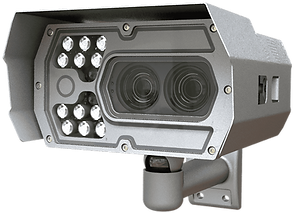

Automate Identifying Container Codes with Industry-Leading OCR Technology,Reducing Processing Time and Boosting Overall Throughput.
HIGHLIGHTED FEATURES
On‑Device Container Code Reading
Container code recognition is performed directly on the camera, removing the need for external processing hardware.
Optimised for Container Environments
Designed specifically for ports, depots and intermodal yards, the camera handles challenging angles, lighting conditions and container surfaces.
Edge‑Based Processing Architecture
All recognition and data generation occur at the edge, reducing network load and simplifying overall system design.
Reliable Capture at Variable Speeds
The camera supports consistent container code reading across slow‑moving and flowing traffic environments.
Non‑Intrusive Installation
Operation requires no in‑ground sensors or additional trigger devices, making it suitable for retrofit and active terminal deployments.
System‑Ready Data Output
Container code results and metadata are available via a documented API for integration into logistics, terminal operating and asset management systems.
APPLICATION AREAS

Automated Container Terminals

Customs Inspections

Port Security

Empty Container Depots
Chemical and Hazardous Materials Tracking


Interchange Management
COMPARE MODELS
Vidar Container Camera
Typical IP camera offered for code recognition
Code recognition
Onboard, recognizing ISO, ILU and UIC codes as an Edge device
Server side recognition: requires a separate software and additional server
Camera module 1
Motorized, distortion-free, extra wide optics
Distorted wide optics
Camera module 2
Motorized, wide angle overview camera in color
No secondary camera module
Minimum distance for OCR
1.5 m [5 feet]
2 m [7 feet]
Built-in illumination
Mixed White and Infrared
Only Infrared
INTEGRATION OVERVIEW
Container Code Processing
Vidar Container performs ISO container code recognition directly on the camera. Recognition results are generated on‑device and made available as structured data without reliance on external processing servers.
Deployment Environments
The camera is designed for use in ports, container terminals, depots and intermodal facilities. It supports fixed installations at gates, lanes and checkpoints as well as integration into existing terminal infrastructure.
Data Output and Interfaces
Container codes, timestamps and related metadata are exposed via a documented API. The camera supports both PUSH (event‑driven) and PULL (request‑based) data access to suit different terminal operating systems and backend platforms.
Triggering and Operation
Capture and recognition are handled internally by the camera, removing the need for external trigger devices or in‑ground sensors. This simplifies installation and reduces integration dependencies in active yard environments.
Network and Power
Vidar Container connects using standard Ethernet and is powered via Power over Ethernet (PoE). Remote access allows configuration, monitoring and firmware updates to be managed without disruption to terminal operations.
System Integration
The camera integrates into terminal operating systems (TOS), logistics platforms and asset management systems as a dedicated container identification source. It is suitable for both new deployments and retrofit integration into existing workflows.
BASIC SET AND OPTIONAL ACCESSORIES
